Novo Fogo Tanager
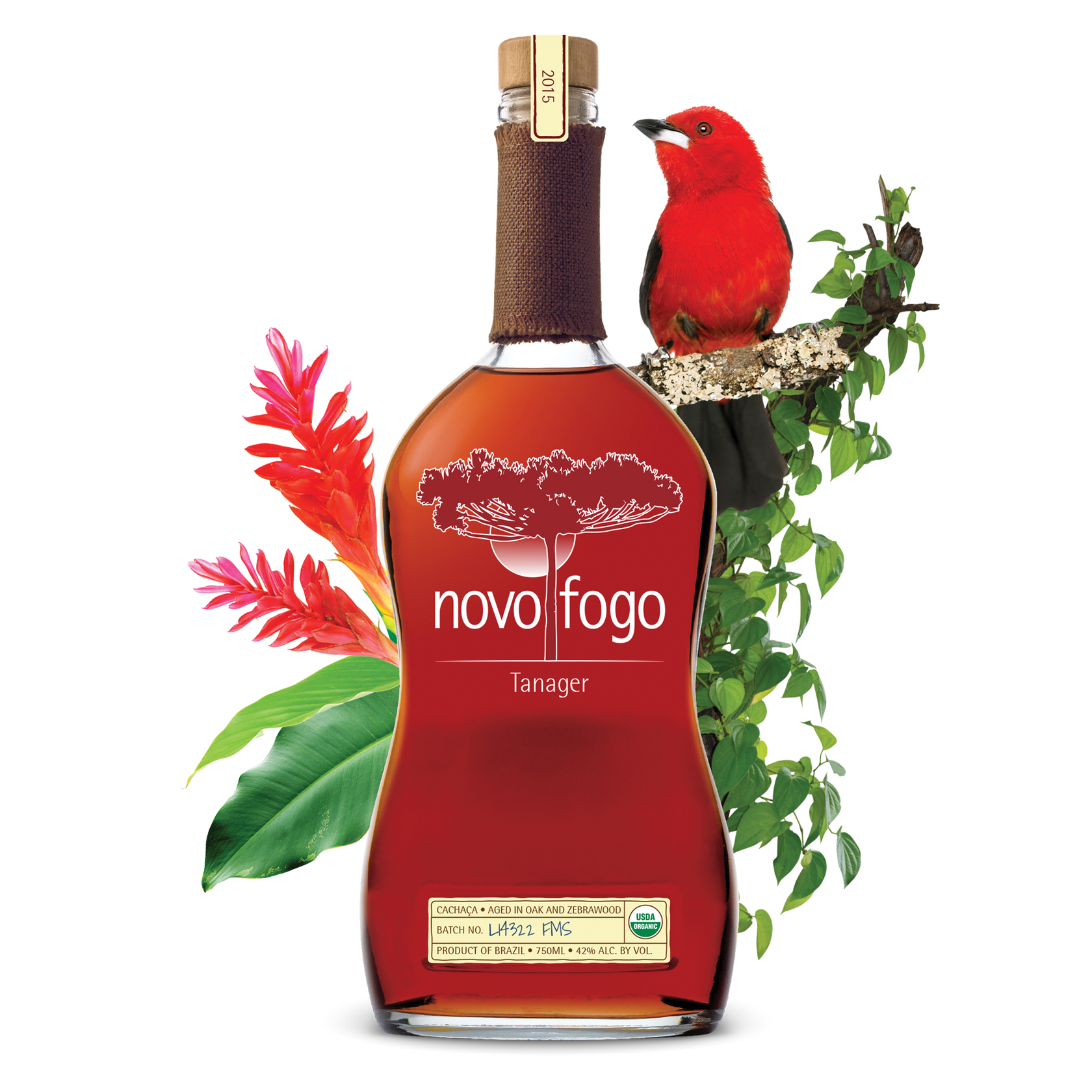
Bottle image courtesy of Novo Fogo Organic Cachaça. :contentReference[oaicite:0]{index=0}
Cachaça is one of those categories of spirits that has often found itself at a crossroads. On one hand, many people, both within and outside of Brazil, regard the drink as nothing more than as a base for the infamous caipirinha. This is not anything unusual as many spirits find their way as a mixer rather than as a neat sipping experience. However, this poses a challenge for the rum enthusiasts. In a metagame where single cask strength bottlings are more sought after than ever before, the often low ABV of many cachaças, as well as the lack of accessible aged options, much of the spirit that makes it way over to our shelves is not presented in a substantial manner.
This is, of course, a result of cachaça’s legal history and socioeconomics. Per Brazilian law, for a cane spirit (aguardente de cana) to be labeled as cachaça, it must be bottled at between 38% to 48% ABV. There are homemade Brazilian moonshines made from cane that can certainly be bottled higher, but they just can’t call themselves cachaça. In fact, many homemade cane spirits can even go as high as 70% ABV, which is usually the strength cachaça comes off the still at, they just rarely find themselves on the market and are landlocked to villages and the like. And this brings us to another issue: cachaça is primarily consumed in Brazil and targeted towards the Brazilian domestic market. Few westerners rarely come across the beverage unless they are regular frequenters of Brazilian steakhouses, and even then, they are mostly exposed to cachaça through the caipirinha. Much of the cachaça we find on the shelves of the liquor store are usually fairly low quality generic brands that struggle to compete with the likes of rhum agricole or charanda in the eyes of a rum enthusiast. This is not entirely a problem, but I feel it misrepresents the spirit in a way that does not do its legacy within Brazilian history and culture a service.
In the past ten to fifteen years, Novo Fogo is one of those brands that has manifested itself on the radars of both rum geeks and cocktail enthusiasts alike. They are a company that I will discuss the history and practices of in a future company dedicated article, but for now what I can say is that I truly admire their craft and dedication in honoring Brazil’s national spirit. And they truly attest to that meticulous attention to detail when we analyze one of the most unique rums I’ve had the pleasure of delighting myself with: Novo Fogo Tanager. Raved about quite a bit in the obscure micro-comments section of the rum nerd ecosystem as one of the most esoteric tasting rums, this lovely dark reddish brown, almost rust/copper-like spirit has caught my eye ever since I was introduced to the world of cachaça. Released in 2017 as part of Novo Fogo’s Two Woods series, the spirit was produced using fresh cane juice from Novo Fogo’s own sugarcane grown in Morretes, Paraná, Brazil, wild fermented to a cane wine of roughly 7-9% ABV, and then distilled in a copper pot still. The resulting spirit is matured in ex-Bourbon Four Roses casks for roughly an year and then finished off in a Araribá or Brazilian zebrawood or canarywood cask for 3 months (the technical term of the wood is Centrolobium tomentosum). The final spirit is bottled at 42% ABV.
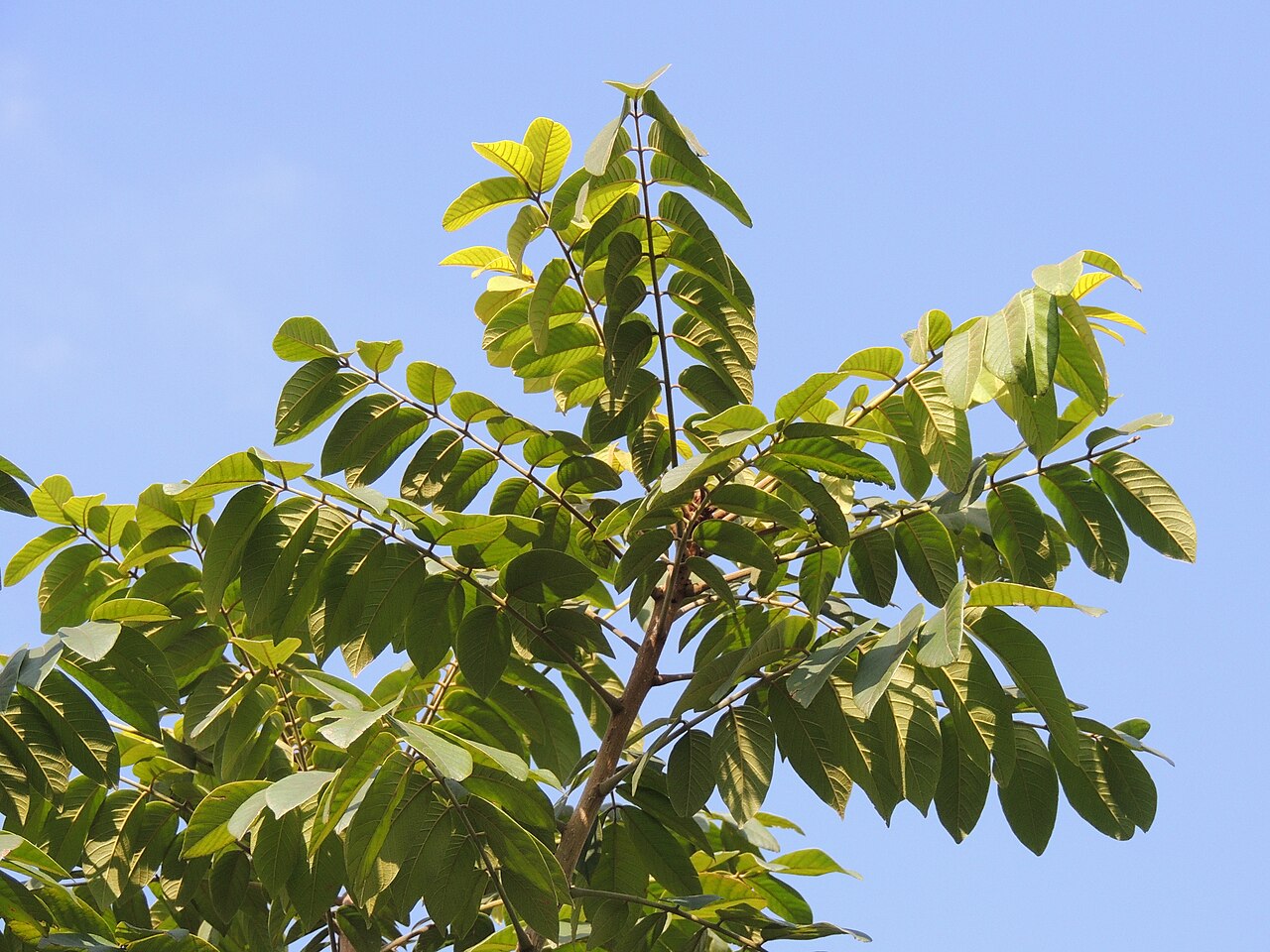
Araribá (Centrolobium tomentosum) photograph courtesy of Wikimedia Commons (licensed under the applicable Wikimedia Commons license; see the original file page for author and license details).
The practice of using exotic woods to finish off or even entirely age cachaça within is one such aspect of the spirit that sets it apart from the primarily ex-Bourbon cask aged rums of the world. It does beg to one ask: why don’t we use more exotic casks to age rum? Frankly, it would add a much needed layer of depth and variation. The Tanager I feel is one such spirit that exemplifies all the right characteristics as to why the use of more exotic cask finishes should be encouraged in the rum world, and that brings us forth the liquid inside the bottle itself. As a preamble, I must note that this is not my first time trying the Tanager. The exotic taste and aroma of the spirit was a lot to take in at once, so it took me time to collect my thoughts. There were even brief periods in which I felt I did not really even enjoy the spirit for a while, and it kinda put me off from reviewing as the drink asks a lot from you, which can overcomplicate giving a formal address on the matter. However, palates and mindsets change over time, and thus so can our feelings on a spirit. The Tanager takes time to grow on you, and once it does, the journey can be quite rewarding.
To formulate my plan of attack, given the weirdness (and not in a bad way) I experienced with my previous history of the spirit, I had used a glencairn, sherry copita, and cognac tulip glass to assess the drinks more properly. The vessels used won’t make too much of a profound difference as far nuance goes, but the more chances I give the drink, the better. I had topped the glasses with a lid and let the drinks stand for roughly 1-2 hours. The next phase would be to assess the aroma so let’s proceed with that. Given some of the unusual production elements such as the wood finish, you would expect this spirit had lost some of its rummy character. But alas, that is not the case. There is a brown sugar or condensed cane juice characteristic present in the nose, think a musty jaggery. It is splendid and lively, and it is very much appreciated. Be patient, and there is also honey, cut grass, dew, tropical rainforest, rainwater, and a plethora of holiday baking spices, like a Christmas pudding steamed in a jungle. There is a lot of fruit, don’t fret: mangoes, lots of mangoes, peach skin, overly unripe green bananas, apple flesh, pears, and there is also this ever so subtle salty fruit molasses or syrup note. As far as the spices are concerned, I get a lot of clove and cinnamon. Perhaps some nutmeg and allspice too. I don’t get a ginger per se, but maybe like a candied ginger or gingerbread, or perhaps ginger cookies? I can’t say for sure about that particular ginger note, but whatever it is, I am reminded me of the holidays despite it being June, almost July at the time of writing.
Once we take a sip, it becomes apparent the taste is not as fruity or as prominent as the nose. That is, of course, not entirely an issue. What we are gifted with is a lovely interplay between menthol, clove, honeysuckle, chili peppers, and a superb tropical, grassy root beer taste. As someone who loved root beer as a kid and still does as an adult, this is like an alcoholic upgrade that is much welcome to our palate. It is brackish in a good way, and it also has quite the pleasant mouthfeel to help harmonize all those flavors together. The texture of this rum is somewhat greasy but in a pleasant manner. The mouth is coated with the oils which I feel are perhaps brought out by the Araribá, and the sensation afterwards is like I took a rainforest flavored mint. An umami, sedimentary presence also permeates the mouth and the back of the throat, perhaps also from the exotic wood finish. It is where a mere imbibement of the Tanager can be a learning curve. The more and more you drink the beverage, the greasy, oily viscosity of the beverage coats not only your palate but also the drinking vessel. I had to use another spirit to help clean out the oil-slicked condensate residue left behind, not that I don’t welcome this. The oleaginous substance of the Tanager I feel really is a byproduct of that zebrawood or canarywood, so I am glad it has done it job here. The effect is almost like an ouzo effect of sorts; therefore, it is likely these are a trail of various fatty compounds or oils extracted from the wood. In a future article, I will perhaps delve more into the chemistry behind this, but for now, consider it a powerful impression that the Araribá is doing its job here lavishly and to great effect, in both taste and texture. Furthermore, the finish almost reminds me of Sichuan chili as it has a numbing effect almost akin to thereof. On the backtrail, a muddy or earthy rainwater quality shows up, but if one uses some water to cleanse their palate between sips, there is an extra white guava or winter pear present likewise. There is an omnipresent cooling effect active throughout the drinking experience.
I cannot rate the Tanager too high. As much praises I am singing to the sky about it, or as much at it seems, there are some flaws. For one, and without sounding like a broken record, the low ABV does show. 42% is far better than most cachaça, but it still struggles against the monsters we see in the rhum agricole world, pushing 50%-60%+ ABV regularly. There is some depth missing and the finish can be improved. Perhaps some more time and age in the Araribá could suffice too. However, in the years to come, it is possible Novo Fogo may bump up their ABV and they may experiment more with different exotic wood cask finishes. I have complete faith in their ability to do so, and they rarely disappoint too sourly given their present history. I am excited for Novo Fogo’s future and would love to see more rums aged in woods I was previously not familiar with before. Moreover, most rums with a unique novelty often that trinket expire, but not the Tanager. It grows on you more as you develop as a person. Cheers.
Final Rating: 84/100